English


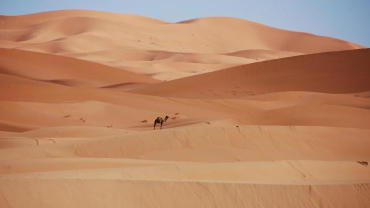
The first sight of the Erg Chebbi dunes rising out of the flat hamada is one of those moments that photographs never quite prepare you for. The scale changes as you get closer, and by the time you’re standing at the edge of Merzouga, the drive already feels worth it.
Before any of that, most travelers land on the same practical question: can you actually rent a car and drive yourself here, or should you leave it to someone else?
The short answer is yes — you can rent a car in Merzouga, or rent one elsewhere in Morocco and drive to Merzouga, and the town itself is fully accessible by paved road. What you rent, where you rent it, and what you do with the car once you arrive depends on your itinerary, your comfort behind the wheel, and how much of the driving you actually want to do yourself. This guide walks through all of it.
Why Rent a Car in Merzouga?

A rental car changes the shape of a Morocco trip. Instead of moving between fixed points on someone else’s schedule, you decide when to stop, how long to stay, and what to skip.
- Freedom to stop. The road from Marrakech or Fes passes through kasbahs, gorges, palm oases, and mountain passes that are easy to miss on a fixed transfer but easy to enjoy when you’re driving yourself.
- Flexibility with timing. Leave early for better light in the Dades Valley, linger in Aït Ben Haddou, or push on if a stop doesn’t interest you.
- Access to smaller villages. Rissani, the Ziz Valley, and smaller Amazigh (Berber) villages around Errachidia and Erfoud are far easier to reach with your own vehicle.
- Combining destinations. You can build a genuine loop — Marrakech, the Dades and Todra gorges, Merzouga, and back a different way — rather than an out-and-back transfer.
- Independent pacing. No group to coordinate with, no fixed departure times.
It isn’t automatically the right choice for everyone. It may not suit you if you’re uneasy on mountain roads with switchbacks and drop-offs (the Tizi n’Tichka pass is a real mountain road), you’re traveling solo and would rather relax and let someone else drive, your trip is short, or you’d prefer not to deal with fuel stops, navigation, and unfamiliar traffic. For those situations, a private driver or organized tour usually delivers a more relaxed experience — more on that comparison later.
Can You Drive to Merzouga With a Rental Car?

This is worth separating into two very different questions, because travelers often blur them together.
Driving TO Merzouga — meaning the town of Merzouga itself, along the roads from Marrakech, Fes, Errachidia, or Rissani — is done on paved, maintained roads for essentially the entire route. A standard rental car handles this without difficulty under normal conditions.
Driving INTO the desert — onto the sand of Erg Chebbi itself, or along unmarked tracks beyond the paved road — is a different matter entirely. This is soft, shifting sand a regular car isn’t built to handle, and most rental agreements explicitly exclude off-road driving from coverage. Getting stuck, or damaging the vehicle, with no coverage and no easy recovery is a real risk.
The practical rule: check your rental agreement’s terms on unpaved roads before you leave the counter, and don’t assume a rental car is cleared to go wherever you point it. Reputable companies will tell you directly whether off-road driving is covered — in most standard contracts, it isn’t.
Do You Need a 4×4 to Reach Merzouga?
This is the question that shapes the rest of your planning, so it deserves a straight answer: for reaching Merzouga itself, no, you generally don’t need a 4×4. The roads from Marrakech and Fes are paved and in reasonably good condition, driven daily by standard sedans and hatchbacks. A 4×4 earns its keep once you go beyond the paved network — remote villages, unpaved shortcuts, or sandy patches after wind pushes dust across the road, which happens here from time to time.
| Situation | Recommended vehicle |
|---|---|
| Driving the main paved route to Merzouga (Marrakech or Fes) | Standard car (economy, compact, or sedan) |
| Day trip to Rissani or Erfoud | Standard car |
| Normal multi-day road trip with overnight stops | Standard car or compact SUV for extra comfort |
| Visiting remote villages off the main road | 4×4 or high-clearance SUV recommended |
| Sandy patches or wind-blown dust on the road shoulder | Standard car is usually fine on the paved surface; a 4×4 gives more confidence |
| Unpaved desert tracks or off-road routes | 4×4 required — and only with rental terms that permit it |
| Driving onto the dunes at Erg Chebbi | Not appropriate for any rental car — use local desert transport instead |
Don’t over-correct into paying for a 4×4 you won’t use. If your plan is the standard road route with a night or two along the way, a well-maintained standard car is normally enough. If your itinerary includes back-road detours, a compact SUV or 4×4 is a reasonable upgrade — just confirm with the rental company that your plans fall within what’s covered.
Marrakech to Merzouga by Car
This is the most popular self-drive route in Morocco, stringing together some of the country’s best scenery. For a full breakdown of every route into the region, see our guide on how to get to Merzouga from Marrakech, Fes and Errachidia.
A logical route: Marrakech → High Atlas Mountains (Tizi n’Tichka pass) → Ouarzazate → Dades Valley / Todra Gorge → Erfoud → Rissani → Merzouga
The full distance is roughly 550–570 km, and driven without stops it can take 9–10 hours. In practice, almost nobody drives it in one push — the road climbs and winds through the Atlas Mountains, and treating it as a straight transfer skips most of what makes it worth driving in the first place.
What you’ll pass along the way:
- The Tizi n’Tichka pass — a high mountain crossing through the High Atlas, with switchbacks and roadside stalls selling minerals and crafts.
- Aït Ben Haddou — a UNESCO-listed fortified kasbah, one of the most photographed sites in southern Morocco.
- Ouarzazate — a practical hub town with fuel, food, and accommodation, often used as a first overnight stop.
- The Dades Valley and Todra Gorge — dramatic rock formations and canyon roads worth a detour or an overnight stay.
- Erfoud and Rissani — desert-edge towns with markets; Rissani’s souks are worth a slow walk.
Breaking the journey into two or three days — Marrakech to Ouarzazate or the Dades Valley on day one, then on to Merzouga on day two — makes for a far better trip than a single long transfer, and gives you time to actually stop instead of driving past everything.
Fes to Merzouga by Car
The northern route is quieter and just as scenic in a different way — trading high mountain passes for cedar forests and a long descent through the Ziz Valley.
The route: Fes → Ifrane → Middle Atlas → Midelt → Errachidia → Erfoud → Rissani → Merzouga
The distance is roughly 450–470 km, with realistic driving time — accounting for mountain roads — around 7–8 hours. As with the Marrakech route, splitting it over two days is more comfortable than a single transfer.
Worthwhile stops:
- Ifrane — a mountain town known for unusual alpine-style architecture, a striking contrast to the desert ahead.
- The Middle Atlas — cedar forests where you may spot Barbary macaques near the roadside (do not feed them).
- Midelt — a practical stopping point at roughly the route’s midpoint.
- The Ziz Valley and Errachidia — a long descent alongside palm groves and cliffs as the landscape turns from mountain to desert.
- Erfoud and Rissani — the same desert-edge towns as the southern route, useful for a break before Merzouga.
This route suits a trip that starts or ends in Fes, or a loop itinerary — arriving via one route and departing via the other, rather than backtracking the same road twice.
Where Should You Rent a Car for a Merzouga Trip?
Where you pick up your rental depends on your overall itinerary, not just proximity to Merzouga.
- Marrakech. The largest selection of agencies and vehicle types. Makes sense if your trip starts there and follows the southern route through Ouarzazate.
- Fes. Good availability, useful if you’re arriving through Fes or building a loop between the two cities.
- Errachidia. Practical if you’re already in the region and only want a car for the final stretch to Merzouga, or a shorter regional rental.
- Merzouga. More limited than the bigger cities — confirm vehicle options and terms in advance. Works well for travelers who arrive by other means and want a car only for local exploring.
If your plan involves picking up in one city and dropping off in another, confirm this one-way option is available and ask about the fee before booking, since it varies by company and route.
What Type of Car Should You Rent?
Economy car. The cheapest option, fine for one or two travelers with light luggage sticking to paved roads. Less comfortable on long mountain drives and tighter on space for a multi-day trip.
Compact or sedan. A comfortable middle ground for two to four travelers — reasonable fuel consumption, decent trunk space, and enough power for mountain grades without paying for capacity you won’t use.
SUV. More ground clearance and a smoother ride on rougher stretches of secondary road, plus more luggage space for groups. Uses more fuel than a compact car.
4×4. Worth it only if your itinerary genuinely includes off-paved-road driving that your rental terms permit. For the standard route to Merzouga, it’s extra cost without much extra benefit.
What actually determines the right choice: group size and luggage, fuel consumption over a route this long, the road conditions on your specific itinerary, and how much you personally value a heavier, more planted feel on the Tizi n’Tichka pass — a matter of comfort more than necessity.
Don’t default to the biggest or most rugged option “just in case.” Match the vehicle to the itinerary you’re actually planning.
How Much Does It Cost to Rent a Car in Merzouga?
Rental prices vary by season, vehicle category, insurance level, rental duration, and pickup location, and change often enough that quoting a fixed number here would be misleading. Peak season (spring and autumn especially) typically costs more than the quieter summer or midwinter months, and a 4×4 consistently costs more to rent and fuel than an economy car.
A few things affect the final price more than travelers expect:
- Insurance level. Basic coverage is cheaper upfront but can carry a higher excess (deductible). Full coverage costs more per day but reduces your exposure.
- One-way fees, if picking up in one city and dropping off in another.
- Minimum rental age and license requirements, which vary by company.
- Season and demand, with prices climbing around high season and major holidays.
Compare a few companies directly, read the insurance terms rather than skimming them, and confirm the total price including insurance and any one-way or airport fees — not just the daily rate advertised.
How to Drive Safely to Merzouga
None of this is complicated, but it’s worth taking seriously, since parts of the route cross remote terrain with long stretches between towns.
- Inspect the vehicle before you leave — tires (including the spare), lights, and existing damage, photographed for your records.
- Fill up when you can, not when you have to. Fuel stations thin out in the Middle Atlas and desert-edge towns.
- Carry water, more than you think you’ll need, especially in warmer months.
- Drive during daylight where possible — unlit roads, animals, and unfamiliar curves are harder to manage after dark.
- Respect posted speed limits, especially through villages, where they drop sharply and are enforced.
- Check the weather before departure. Mountain passes can see fog, rain, or winter snow; desert stretches can bring wind and reduced visibility.
- Know your rental company’s restrictions on unpaved roads, and don’t drive somewhere your insurance doesn’t cover.
- Keep basics on hand — a charged phone, offline navigation as backup, and your rental company’s emergency number.
- Plan realistic daily distances. Mountain roads take longer than the kilometers suggest.
None of this is meant to be alarming — most travelers drive these roads without incident. It’s a route that rewards preparation more than a fast highway does.
Where to Leave Your Rental Car Before a Sahara Desert Camp
Once you reach the Merzouga area, most travelers park at their riad, hotel, or desert camp’s meeting point and continue into the dunes using transport arranged by their accommodation or tour operator — typically 4x4s, or camels for the final stretch to an overnight camp.
This isn’t a formality. A standard rental car isn’t built for soft sand, and driving one onto the dunes risks getting stuck, damaging the vehicle, and voiding insurance coverage, since off-road use typically isn’t included in a standard agreement.
Confirm parking arrangements with your accommodation or desert camp in advance — most are used to travelers arriving by rental car and have a clear system for where to leave it safely.
What to See Around Merzouga With a Rental Car
A rental car covers a good amount of what’s worth seeing in the region, but not all of it. For a broader list, see our guide to the best things to do in Merzouga.
Accessible by normal road:
- Merzouga village — cafés, shops, and the edge of Erg Chebbi visible from town.
- Rissani — a historic market town with souks worth a slow walk, roughly 30–40 minutes away.
- Local villages around Merzouga and along the road to Rissani, including glimpses of Khamlia and other small communities.
- Desert viewpoints reachable from the paved road or short, well-used approach tracks near town.
Requires local desert transport or a specialized vehicle:
- Driving onto or across the dunes of Erg Chebbi — where 4×4 excursions and camel treks take over from any standard rental car.
- Remote desert camps further from the road, typically reached by the camp’s own 4×4 or camel transport.
- Off-road routes into the deeper desert, best left to local drivers who know the terrain and shifting conditions.
The clearest way to think about it: your rental car gets you to the edge of the experience. What happens in the sand itself is usually handled by someone who does it every day.
Is Renting a Car in Merzouga Worth It?
There’s no single right answer — it depends on what kind of traveler you are.
Renting a car is a good choice if you want independence and control over your schedule, you genuinely enjoy road trips rather than just the destination at the end of one, you want to explore multiple stops along the way, and you’re comfortable driving mountain roads and long distances in an unfamiliar country.
A private driver or organized tour may be better if you’d rather not handle long-distance or mountain driving yourself, you want someone else managing navigation and logistics, you’re traveling solo and would prefer a more social experience, or you want a fully organized Sahara experience — camp booking, desert transport, and routing — handled for you.
Some travelers land in the middle: renting a car for part of the trip and booking a private tour or desert camp package for the Merzouga leg specifically. There’s nothing wrong with mixing approaches to match how you want to spend your time.
Ready for Your Merzouga Adventure?
If you’ve read this far, you have a realistic picture of what driving to Merzouga involves — and what it doesn’t. Whether you decide to rent a car and drive yourself, or hand the logistics to someone who does this daily, Merzouga Explorer can help put the trip together.
We arrange Morocco road trip itineraries, private transfers, and Sahara desert camp experiences for travelers heading to Merzouga, including the routing, timing, and desert transport that takes over once a standard rental car reaches its limit. If you’d rather not plan every stop yourself, or just want a second opinion on your route, we’re happy to help.
Frequently Asked Questions
Can I rent a car and drive to Merzouga?
Yes. The roads from Marrakech, Fes, and Errachidia to Merzouga are paved for essentially the entire route. Driving onto the dunes themselves is a separate matter that a standard rental car isn’t meant for.
Do I need a 4×4 for Merzouga?
Not for the drive itself — a standard car handles the paved route fine. A 4×4 helps only for remote villages, unpaved tracks, or off-road detours, and only if your rental agreement permits that kind of driving.
Can I drive a normal car to Erg Chebbi?
Yes, to Merzouga and to viewpoints reached by paved road or firm track. Driving onto the dunes requires a 4×4 arranged locally — a standard rental car isn’t built for soft sand and typically isn’t insured for off-road use.
Is driving to Merzouga safe?
Most travelers drive it without incident. Safety comes down to preparation: checking the vehicle beforehand, driving in daylight where possible, watching fuel levels on longer stretches, and respecting your rental company’s restrictions on unpaved roads.
How long does it take to drive from Marrakech to Merzouga?
Roughly 550–570 km, about 9–10 hours without stops. Most travelers split the journey over two or three days rather than driving it in one push.
How long does it take from Fes to Merzouga?
Roughly 450–470 km, with realistic driving time — accounting for mountain roads — of around 7–8 hours. Splitting it over two days is more comfortable than a single long transfer.
Where should I rent a car for a Sahara road trip?
Marrakech and Fes have the widest selection of agencies and vehicle types. Errachidia and Merzouga are more limited but work well if you’re already in the region or only need a car for local exploring.
Can I leave my rental car in Merzouga while visiting a desert camp?
Yes — most travelers park at their riad, hotel, or camp’s meeting point and continue into the dunes on transport arranged by their accommodation. Confirm the arrangement in advance.
Is it better to rent a car or book a private driver?
Depends how you want to travel. Renting suits travelers who want independence and enjoy road-tripping. A private driver or tour suits those who’d rather not handle long-distance or mountain driving and want a more relaxed, organized experience.
What should I bring when driving to Merzouga?
Water, a charged phone with offline maps as backup, sun protection, and your rental company’s emergency contact details. Check the spare tire and confirm what your insurance covers before leaving the rental counter.