English


Use this Complete Merzouga Travel Guide 2026: Best Time, Costs, Tours and 3–4 Day Itineraries if you are still deciding how Merzouga should fit into a Morocco trip. Instead of treating the desert as a single excursion, this guide helps you choose the right entry point, balance driving with time in the dunes, estimate the main cost drivers and select activities that match your travel style.
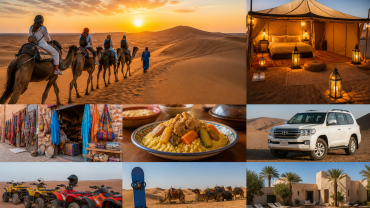
Merzouga is often presented as a simple camel-trek destination, but the planning choices are broader than that. You can arrive from Fes through the Middle Atlas, travel from Marrakech across the High Atlas and kasbah country, approach from Ouarzazate and the Dades Valley, or use Errachidia for a shorter connection. Once there, you can choose a traditional camel approach to camp, a 4×4 transfer, a cultural visit, a quiet photography day or a mixture of all four.
The most important rule is to respect the distances. A map can make Morocco’s southeast look compact, but mountain roads, scenic stops and changing road conditions affect the journey. A good itinerary leaves room for the desert rather than using it only as the final overnight stop.
Start by choosing your Merzouga travel style
Before comparing tours, decide what you want the trip to feel like. This prevents you from paying for inclusions you will not use or choosing an itinerary that is too demanding.
The classic first-time desert stay
This style usually includes one night near or in Erg Chebbi, a sunset transfer, dinner, sunrise and breakfast. It is suitable for travelers with limited time who want the iconic desert experience. Add a second local night if you want the trip to feel less rushed.
The scenic southern Morocco road trip
This approach makes the journey part of the destination. You might combine mountain scenery, kasbahs, valleys and gorges before reaching Merzouga. It works best with three or four days—or longer—because a long transfer can otherwise dominate the visit.
The culture-and-landscape stay
Travelers who prefer context over a quick photo stop can combine the dunes with Khamlia, local food, rural landscapes and a 4×4 circuit. Keep expectations respectful: a village or community visit should be arranged locally, and photography should never be assumed.
The comfort-first desert break
A comfort-first plan may use a private vehicle, a shorter camel ride or 4×4 transfer, a camp with facilities that meet your needs and an extra night near the dunes. This can be a sensible choice after several long days on the road.
Complete Merzouga Travel Guide 2026: when to schedule your visit
The best dates depend on whether you prioritize moderate daytime temperatures, winter photography, family comfort or the possibility of traveling outside the busiest periods. Spring and autumn are generally convenient for a balanced itinerary. Winter offers cooler days and cold nights. Summer calls for shorter outdoor sessions and careful timing around the heat.
Because this site already has detailed seasonal content, use Best Time to Visit Merzouga: A Seasonal Travel Guide for the broad seasonal picture rather than repeating every month here. If you are traveling with children, the practical advice in Visiting Merzouga in Winter with Family can help you think through cold nights, clothing and pacing.
Match the season to your activity
- Sunrise and sunset: Possible throughout the year, though clothing and timing need to change with the season.
- Long walks: More comfortable in cooler months or during the first and last hours of daylight.
- Photography: Winter’s clear air can be appealing, while spring and autumn may offer comfortable working conditions.
- Family travel: Avoid an itinerary that combines the longest road days with late camp arrivals.
- Stargazing: Choose a night with suitable conditions and reduce artificial light around your sleeping area.
How to get to Merzouga without wasting your itinerary
When researching how to get to Merzouga, compare not only distance but also what you will see on the way. The same number of travel hours can feel very different in a private vehicle with scenic stops versus a fixed group transfer.
Fes to Merzouga
A Fes-to-Merzouga route is a strong choice for visitors who want to combine imperial-city architecture with the Middle Atlas and the desert. The route can include forested highlands, open plateaus and the Ziz Valley. It is usually better treated as a multi-day journey than a simple transfer.
Review the route details of the Four-day Fes to Merzouga Tour when deciding how many nights to allocate to the road and how many to the desert.
Marrakech to Merzouga
From Marrakech, the journey can cross the High Atlas and connect with Aït Ben Haddou, Ouarzazate and the Dades Valley. The scenery is varied, but the route demands realistic scheduling. If a tour advertises many stops, ask how long you actually spend at each one.
The 3 Day Marrakech to Merzouga Desert Tour is a relevant internal option for comparing a compact route from the Red City.
Ouarzazate to Merzouga
Ouarzazate is useful for travelers already exploring southern Morocco. You can spend more time in the Dades and Todra landscapes or choose an itinerary with off-road sections. Off-road travel should be confirmed in advance, including the type of vehicle and which parts are included.
For a more adventure-oriented comparison, see the 4 Day Ouarzazate to Merzouga Off Road Tour.
Errachidia to Merzouga
Errachidia is a practical starting point when your priority is reaching the desert efficiently. You can arrange a private transfer, rent a car where appropriate or book a tour that includes the local highlights. This route leaves more time for Erg Chebbi but may include fewer of the famous southern road-trip stops.
Compare the 3 Day Merzouga Tour from Errachidia if you want a local itinerary with a private-tour structure.
How to plan your nights
A common mistake is to count a camp night as the entire Merzouga experience. In reality, the camp transfer may happen late in the afternoon, and sunrise means an early start the next day. One camp night can be memorable, but a second night near the dunes gives you a useful buffer.
- One night: Best for a short visit. Prioritize sunset, dinner, sunrise and breakfast.
- Two nights: Best for a balanced stay. Add a 4×4 circuit, Khamlia or relaxed dune time.
- Three or more nights: Suitable for travelers who want a slower base, photography, family rest days or several local excursions.
Ask where your large luggage will be stored during the camp stay. Many travelers prefer to take a small bag for one night and leave the rest with their accommodation or driver, but the arrangement should be agreed beforehand.
Three-day itinerary options
Option A: three days from Errachidia
Day 1: Travel from Errachidia toward Merzouga, stopping for viewpoints and local scenery where time allows. Arrive with enough daylight for a camel trek or 4×4 transfer to camp.
Day 2: Watch sunrise, return for breakfast and spend the day on an Erg Chebbi circuit. Visit Khamlia if arranged in advance, or choose a quiet afternoon near the dunes. Sleep near the desert rather than immediately beginning a long onward transfer.
Day 3: Depart toward Errachidia or your next destination. If you need to connect with a flight or train, leave a generous margin rather than scheduling a close same-day connection.
Option B: three days from Marrakech
Day 1: Leave Marrakech and cross the High Atlas. Depending on the route, visit Aït Ben Haddou or continue through the Ouarzazate area. Stay in the Dades Valley or another agreed overnight location.
Day 2: Continue through southern landscapes toward Merzouga. Reach the dunes in the afternoon and transfer to camp for sunset and dinner.
Day 3: See sunrise, have breakfast and begin the return journey. This version is efficient but demanding. If you want more time at the desert, extend the trip or use a shorter starting route.
Four-day itinerary options
Option A: four days from Fes
Day 1: Leave Fes and travel through the Middle Atlas. Use the day for mountain scenery and an overnight stop that breaks up the journey.
Day 2: Continue through high plateaus and the Ziz Valley toward Merzouga. Arrive in time for a camp transfer only if the road schedule is realistic; otherwise, sleep near the dunes and start the desert experience the following day.
Day 3: Enjoy sunrise, breakfast and a 4×4 circuit. Include Khamlia or another local visit only if it fits naturally. A second night near Erg Chebbi gives you time to recover from the long approach.
Day 4: Begin the onward journey. Confirm whether your tour returns to Fes or finishes elsewhere, and check what transport is included after the final stop.
Option B: four days from Ouarzazate
Day 1: Explore the route through the Dades Valley or nearby kasbah landscapes. Stay in a valley or continue according to your chosen tour.
Day 2: Travel toward Merzouga, with time for scenic viewpoints and the changing terrain. Reach the desert area and settle into accommodation.
Day 3: Transfer to camp for sunset, or use this day for the 4×4 desert circuit and local cultural visits before the camp night. The better sequence depends on your accommodation and departure time.
Day 4: Watch sunrise, have breakfast and depart after collecting luggage. Avoid adding too many major stops if the final destination is far away.
Merzouga desert tour: what should be included?
When comparing a Merzouga desert tour, look beyond the words “desert camp.” Ask for the full daily schedule and list of inclusions. Two tours can appear similar while offering very different amounts of private time and transport support.
- Starting point and final drop-off location.
- Private or shared vehicle and approximate group size.
- Driver, guide or local camp staff arrangements.
- Number and type of hotel or guesthouse nights.
- Camp accommodation and bathroom arrangement.
- Meals included, plus drinks and lunch arrangements.
- Camel trek duration or 4×4 camp transfer.
- 4×4 circuit, Khamlia visit and other optional activities.
- Extra fees, cancellation terms and payment schedule.
For travelers who want to focus on the dunes rather than a long approach, a shorter itinerary from Errachidia may be more suitable than a tour from Marrakech. For travelers who want a complete southern Morocco route, the extra road days can be part of the value.
Estimating costs for travel to Merzouga
The cost of travel to Merzouga is shaped by logistics more than by the dunes themselves. Your starting city, number of travelers and transport style can make a bigger difference than whether you choose a standard or upgraded camp.
Build a simple trip budget
- Getting there: Include airport or station transfers, long-distance transport, fuel or private vehicle costs.
- Sleeping: Separate ordinary accommodation near the dunes from the camp night.
- Eating: Check which meals are included and budget separately for lunches, drinks and snacks.
- Activities: List camel or 4×4 transfers, desert circuits, sandboarding and cultural visits.
- Contingency: Keep room for a changed transfer, an extra night or a small local purchase.
Request prices for the exact dates and party size. Ask whether a quote is per person or per vehicle, whether it changes for solo travelers and whether seasonal demand affects availability. A written inclusions list is more useful than a low headline figure.
Things to do in Merzouga for different travelers
For photographers
Plan around light rather than trying to photograph everything. Sunrise and the hour before sunset are usually the most rewarding times for dune textures and shadows. Protect gear from sand, carry spare batteries and ask permission before photographing people.
For families
Choose shorter activity blocks, plan shade and carry water. A 4×4 transfer can be a practical alternative to a long camel ride. Confirm sleeping and bathroom arrangements before booking, particularly if children need predictable facilities.
For active travelers
Consider a 4×4 circuit, sandboarding or a guided walk. Do not head deep into the dunes alone without local advice, especially in heat or wind. A guide can help you understand the terrain and return route.
For culture-focused visitors
Include Khamlia or another locally arranged visit, but approach it as an opportunity to listen rather than a performance created solely for visitors. The site’s guide to the music and traditions of Khamlia provides useful background.
Health, comfort and responsible travel
Heat, cold, sun, dust and long drives are the main comfort considerations. Drink regularly, cover your skin, use sun protection and keep a warm layer accessible. If you feel unwell, tell your guide or accommodation team rather than pushing through an activity.
Use water thoughtfully and follow your accommodation’s guidance. Avoid leaving packaging in the dunes, do not remove stones or plants as souvenirs, and keep noise low at night. When buying crafts or arranging a local activity, ask who provides it and agree on the price beforehand.
Do not assume that a desert camp has the same facilities as a city hotel. Ask about electricity, charging, showers, toilets, Wi-Fi and the distance from the vehicle drop-off point. These details help you choose honestly according to your needs.
Common planning mistakes
- Trying to travel from Marrakech to Merzouga and back in too few days.
- Booking a camp without confirming how you reach it.
- Taking a large suitcase when only a small overnight bag is practical.
- Assuming a camel trek is the only camp-transfer option.
- Forgetting that winter nights can be cold.
- Paying for activities without checking whether they are private, shared or optional.
- Scheduling a tight flight or train connection after a long desert transfer.
For a fuller checklist, read Common Mistakes to Avoid in Merzouga before finalizing your route.
Final decision guide
Choose Errachidia if you want a shorter connection and more time in the Merzouga area. Choose Fes if you want to combine the desert with the Middle Atlas and a historic city. Choose Marrakech if the High Atlas, Aït Ben Haddou and southern Morocco are part of your main plan. Choose Ouarzazate if you are already exploring the south or want to consider an off-road route.
Choose one camp night for a compact first visit, two local nights for a balanced experience and a longer stay if photography, culture or rest is important. Choose a private tour when route control matters most; choose a shared tour when meeting other travelers and sharing transport are priorities. For a direct comparison of real, currently bookable tours by starting city, duration and price, see our best Merzouga desert tours guide.
The best Complete Merzouga Travel Guide 2026: Best Time, Costs, Tours and 3–4 Day Itineraries is not a rigid schedule. It is a framework that leaves enough space for the road, the weather and the desert itself. Compare the listed tour options, request clear inclusions and build the trip around the experience you actually want.
Frequently asked questions
Should I visit Merzouga from Fes or Marrakech?
Choose Fes for a route through the Middle Atlas and Ziz Valley. Choose Marrakech if you also want the High Atlas, Aït Ben Haddou, Ouarzazate and southern valleys. Both require a realistic multi-day schedule.
Can I visit Merzouga without riding a camel?
Yes. Many travelers use a 4×4 transfer to camp and enjoy sunrise, sunset, stargazing and local excursions without a long camel ride.
How can I compare Merzouga tour prices?
Request an itemized quote showing transport, accommodation, meals, camp transfer, activities, group size and drop-off point. Compare equivalent inclusions rather than headline prices.
What should I ask a desert camp before booking?
Ask about bathroom facilities, electricity, heating or cooling, charging, luggage storage, meal inclusions, camp access and the transfer method from the meeting point.
What are the best things to do in Merzouga besides camel trekking?
Popular alternatives include a 4×4 Erg Chebbi circuit, sunrise and sunset viewing, stargazing, sandboarding and a respectfully arranged visit to Khamlia.