English


Erg Chebbi is the dune sea that makes Merzouga famous — a compact, 170 km² field of star dunes and ridges in southeastern Morocco, with the tallest peaks rising roughly 150 m above the surrounding rocky plain (Charton et al., Scientific Reports, 2024). It’s the single reason most visitors come to this corner of the Sahara, and it’s a genuinely unusual landform: a small, sharply-defined pocket of true sand dunes sitting inside a much larger stony plateau.
This guide covers what that dune field actually is, how it formed, what lives in it, and everything practical you need to plan a visit — timing, access, photography, sustainability, and how it compares to Morocco’s other deserts.
Table of Contents
Key Takeaways
- Erg Chebbi spans roughly 170 km² and its tallest star dune reaches about 150 m, built up mostly within the last 1,000 years and still migrating west at roughly 0.55 m per year (Scientific Reports, 2024).
- The dunes formed from wind-blown sand accumulating after a roughly 8,000-year gap following the end of the African Humid Period — geologically young by desert standards.
- Despite looking barren, the erg supports real wildlife: fennec foxes, desert hedgehogs, and jerboas, alongside hardy plants like pink asphodels and mauve statice.
- Sunrise and sunset are the best times to see the dunes’ color and texture — the same slopes shift from pale gold to deep red within twenty minutes.
- Access runs through the town of Merzouga, roughly 560 km (9–10 hours) from Marrakech by road.
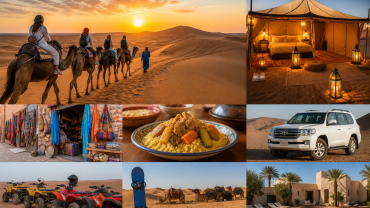
Ready to see it in person? Browse our 3-Day Marrakech to Merzouga Desert Tour.
What Is Erg Chebbi?
An “erg” is the technical term for a large field of wind-formed sand dunes — most of the Sahara is actually rocky hamada or gravel reg, not sand, which is what makes true ergs so geographically distinctive. This particular one sits in southeastern Morocco near the Algerian border, running roughly 28 km north to south and 5–7 km east to west.
Unlike the gently rolling dune fields shown in most desert stock photography, this landscape is dominated by complex star dunes — pyramid-shaped formations built by winds blowing from multiple directions, which is exactly why they grow tall instead of migrating flat across the plain. The tallest peak, sometimes called the “Big Dune,” is the visual centerpiece of nearly every desert-camp itinerary run out of Merzouga.
Geographically, it sits within the Drâa-Tafilalet region, close enough to Algeria that its eastern edge effectively marks the border. Unlike the hamada that surrounds it for hundreds of kilometers in every direction, this pocket of sand is a genuine outlier — which is part of why it draws visitors from across the world rather than the wider desert region as a whole.
How Big Are the Dunes?
The tallest dunes reach approximately 150 m at their peak, based on structural analysis published in Scientific Reports in 2024 — a figure that’s well-documented compared to some other Moroccan dune fields, where height claims vary wildly across sources and marketing pages.
| Metric | Figure |
|---|---|
| Tallest dune height | ~150 m |
| Erg dimensions | ~28 km x 5–7 km |
| Total area | ~170 km² |
| Westward migration rate | ~0.55 m/year |
| Age of main dune accumulation | Mostly within the last ~1,000 years |
Source: Charton et al., “Structure and chronology of a star dune at Erg Chebbi, Morocco,” Scientific Reports (2024), based on optically stimulated luminescence dating and ground-penetrating radar.
For comparison, that’s a smaller footprint than Morocco’s largest erg near Zagora, but the height and the sheer accessibility — you can walk to these dunes directly from town — is what makes this specific field so heavily visited relative to its size.
How These Dunes Formed: The Geology
These dunes are surprisingly young in geological terms. A 2024 study using optically stimulated luminescence dating — a technique that measures when sand grains were last exposed to sunlight — found roughly an 8,000-year gap between the end of the African Humid Period and when sand actually began accumulating at the base of the main star dune.
Once accumulation started, it moved fast by geological standards: the dune grew to roughly 100 m within just the past 1,000 years, and it continues migrating westward at approximately 0.55 m per year as bimodal winds — blowing from two dominant directions — keep piling sand onto its slip faces rather than pushing it steadily in one direction.
That bimodal wind pattern is exactly why the dunes here build vertically into star shapes instead of forming the long, low ridges typical of simpler dune fields elsewhere in the Sahara. Star dunes are actually a relatively rare formation globally — most sand seas are dominated by crescent-shaped barchan dunes, which migrate as a single moving unit, or long linear ridges that stretch for kilometers in one direction.
A star dune instead grows upward from a fixed base, with multiple arms radiating outward like spokes, because winds arriving from several directions each deposit sand on a different face rather than pushing the whole structure one way. That’s precisely why researchers singled this particular erg out for detailed dating and structural study — star dunes preserve a much longer, more complex geological record inside their internal layers than a simple migrating crescent dune ever could, which is also why their exact age was so hard to pin down before modern luminescence dating techniques became available.

Wildlife and Plant Life in the Dunes
This stretch of Sahara looks empty from a distance, but it supports a small, well-adapted set of species. The fennec fox — recognizable by its oversized ears, which help dissipate heat and pick up the movement of prey underground — is the dune field’s most iconic resident, though it’s nocturnal and rarely spotted during a standard visit.
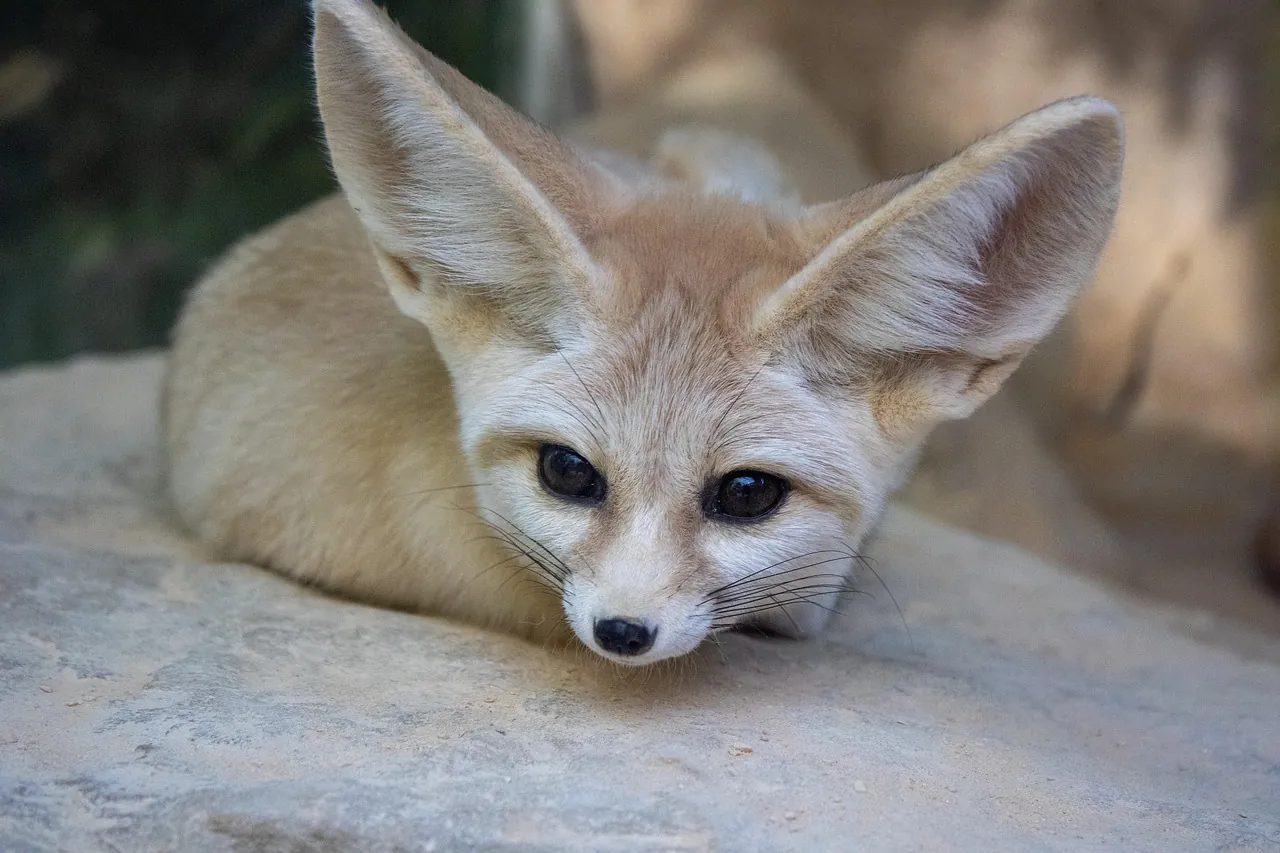
Desert hedgehogs and jerboas — small jumping rodents built for covering ground fast on loose sand — also survive here in low, scattered numbers. Reptiles including desert-adapted lizards and skinks are more commonly seen, since they’re active during daylight hours and tend to surface when the sand has warmed enough.
Plant life is sparse but present in more stable areas at the erg’s edges, including pink asphodels and mauve statice — both adapted to survive on minimal, unpredictable rainfall. None of this is visible from a moving vehicle; spotting it usually means a quieter moment on foot, early or late in the day when the desert’s few residents are actually active.
Getting to Erg Chebbi From Merzouga and Beyond
The dunes aren’t reached directly — you travel to the town of Merzouga first, which sits right at their edge, then continue in by camel, 4×4, or on foot. From Marrakech, that means a roughly 560 km, 9–10 hour drive over the Tizi n’Tichka pass through the Atlas Mountains, typically split across two days by guided tours with an overnight stop in Dades Gorge or Ouarzazate.
Other common departure points include Fes, Errachidia (the nearest airport), and Ouarzazate, each with different drive times and scenery along the way. For the full route breakdown by gateway city, see our Merzouga transport and access guide.
The Best Ways to Experience the Dunes
A camel trek is the classic way in — roughly an hour from Merzouga to a camp inside the dunes, timed for sunset or sunrise so the temperature and the light both cooperate. It’s slow by design, which is part of the appeal: you arrive at camp having actually felt the scale of the place rather than just glimpsed it through a window.
4×4 and quad-bike excursions cover more ground faster and suit travelers short on time or less interested in camel riding specifically, while sandboarding on the steeper slip faces has become a popular add-on requiring no prior experience. We cover all of these options in detail, including how to choose a responsible operator, in our full guide to things to do in Merzouga.

Best Time of Day to Visit
Light matters more here than almost anywhere else in Morocco. The sand shifts color dramatically depending on the sun’s angle — pale gold at midday, deep orange approaching sunset, and briefly near-red in the final minutes before the light fades. Climbing a dune 30–45 minutes before sunset or sunrise gives you time to find an uncrowded spot and watch the full transition rather than just the final moment.
Midday is worth avoiding for comfort as much as photography — flat, harsh overhead light washes out the ridgelines that make these dunes distinctive in photos, on top of being the hottest part of the day to be climbing sand on foot.
Best Time of Year to Visit
Spring (March–May) and autumn (September–November) offer the most comfortable conditions for exploring on foot, with milder daytime temperatures than the summer extremes, when highs regularly exceed 40°C. Winter brings genuinely cold desert nights, so a trip timed for December through February needs warmer layers than you might expect from a “desert” destination. For a full month-by-month breakdown and what to pack for each season, see our Merzouga packing list and seasonal guide.
Erg Chebbi vs. Morocco’s Other Ergs
This isn’t Morocco’s only dune field. Erg Chigaga, reached via the town of Zagora, is significantly larger in total area and considerably more remote — reaching it requires a further 4×4 transfer beyond the last paved road. What this erg trades in size, it makes up for in accessibility: you can walk from a hotel bed to the dune crest in under an hour, which isn’t true of its larger cousin further south.
If you’re deciding between the two for your trip, we’ve compared them directly — distance, dune size, crowd levels, and which suits which kind of traveler — in Merzouga vs. Zagora: which Sahara gateway to choose.
Where to Stay Nearby
Most visitors split their stay between a hotel or guesthouse in Merzouga town and a night inside the dunes at a desert camp. Camps range from simple shared Berber tents to glamping-style setups with private bathrooms, and the choice shapes how close you actually sleep to the sand itself — some camps sit right among the highest dunes, others closer to the erg’s flatter edge. See our full accommodation guide for a breakdown of both options.
Photography Tips
- Shoot low, along the ridgelines. Getting close to the sand and shooting along a crest exaggerates the curves that make star dunes photogenic.
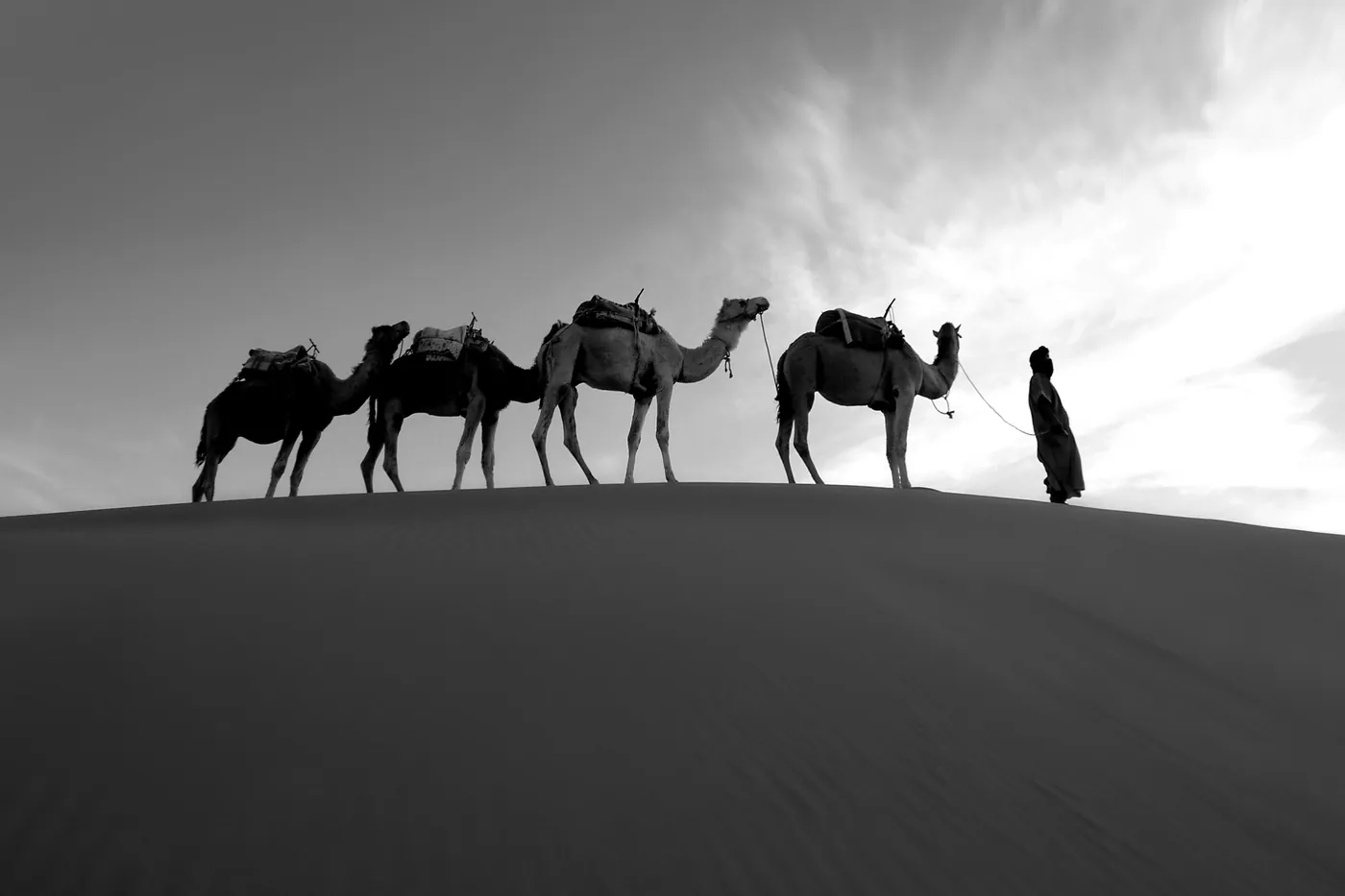
- Include a human or camel silhouette for scale. Without a reference point, a 150 m dune can look like any pile of sand in a photo — a figure on the ridge instantly communicates the actual height.
- Protect your gear from sand, not just water. Fine Sahara sand gets into camera seams and lens threads faster than most photographers expect — a dust-proof pouch or wrap between shots helps.
- Shoot untouched slopes first. Footprints show up clearly in low-angle light, so photograph a dune face before your group walks across it, not after.
- Bring a lens cloth, not just a blower. Wind-blown grit will find its way onto your lens regardless of precautions; a proper microfiber cloth handles it better than compressed air alone.
Visiting Responsibly
Morocco’s record 19.8 million visitors in 2025 (Morocco Ministry of Tourism, via ATTA) means popular dune fields like this one see real, sustained pressure from tourism — vehicle tracks, foot traffic, and litter all leave a longer mark on sand than most visitors assume, since there’s no vegetation to recover the surface quickly.
- Stick to established routes for 4×4 and quad-bike excursions rather than cutting new tracks across untouched dune faces.
- Pack out everything you bring in, including small items like bottle caps and cigarette butts that are easy to lose in loose sand.
- Choose operators who limit camel loads and rest their animals — animal welfare and dune preservation tend to go together in practice, since responsible operators generally also respect route limits.
- Support Merzouga’s local economy directly where you can — locally-run camps and guides have a direct incentive to keep the dunes in good condition for the long term.
Common Myths, Corrected
A few misconceptions are worth clearing up before you go. First, this dune field is not “the Sahara” in the sense of the whole desert — it’s one small, specific pocket of sand within a much larger, mostly rocky region; the cinematic sand-sea image people associate with “the Sahara” is really just a handful of ergs like this one, not the desert as a whole.
Second, the dunes are not static — they measurably migrate westward year over year, which is part of why the exact shape of the tallest peak shifts slightly over time rather than staying identical to old photographs. Third, this landscape is not empty of life, even though it looks that way from a moving vehicle; fennec foxes, hedgehogs, and jerboas all persist here in low numbers, just mostly out of sight during daylight.
Fourth, you don’t need to be especially fit to experience it properly — a standard camel trek requires no physical exertion beyond sitting and holding on, and even the walking portions are short, slow climbs rather than serious hikes.
Frequently Asked Questions
How tall are the Erg Chebbi dunes?
The tallest dune reaches approximately 150 m, based on structural dating published in Scientific Reports in 2024. Most of that height built up within roughly the last 1,000 years.
Is Erg Chebbi the same as Merzouga?
No, though the terms are often used interchangeably. Merzouga is the gateway town; Erg Chebbi is the specific dune field just outside it, which is what most visitors actually mean when they picture u0022Merzouga.u0022
Do the dunes actually move?
Yes. Research shows the main star dune migrates westward at roughly 0.55 m per year as wind continually shifts sand from the windward side to the slip faces.
What animals live in the dunes?
Fennec foxes, desert hedgehogs, and jerboas are the dune field’s main wildlife, alongside hardy plants like pink asphodels and mauve statice at its more stable edges. Most are nocturnal and rarely seen during a typical visit.
What’s the best time to photograph the dunes?
Sunrise and sunset, when low-angle light brings out the dunes’ texture and color. Climb a dune 30–45 minutes before either to find a clear spot before the main light show starts.
How do I get to Erg Chebbi?
You travel to Merzouga first — roughly 560 km and 9–10 hours by road from Marrakech — then continue into the dunes themselves by camel, 4×4, or on foot from the town’s edge.
Do I need to be fit to visit Erg Chebbi?
No. A standard camel trek requires no physical exertion beyond sitting and holding on, and the walking portions at camp are short, gentle climbs rather than serious hikes.
Conclusion
Erg Chebbi is a small, geologically young, and genuinely dynamic landform — not a static backdrop but a dune field that’s still actively shaped by wind, still home to real wildlife, and still growing westward year by year. Understanding what you’re actually looking at, timing your visit around the light rather than just your itinerary, and traveling through it responsibly makes the difference between a quick photo stop and a trip you remember clearly.
Ready to see it for yourself? Browse our guided Merzouga desert tours or check our full packing list and trip-prep guide before you go.