English


Morocco welcomed a record 19.8 million visitors in 2025, and Merzouga’s Erg Chebbi dunes — rising up to 150 m above the surrounding plain (Erg Chebbi, Wikipedia) — are one of the country’s most-photographed reasons why. But Merzouga is more than a backdrop: it’s a small desert town built entirely around getting travelers into the Sahara and back out again with a genuinely memorable trip. This guide rounds up the best things to actually do here, from the obvious (camel trekking) to the easy-to-miss (a seasonal lake that fills with flamingos), so you can build a Merzouga itinerary around what actually suits you.
Planning these activities? Our guide to how safe Merzouga is for tourists covers practical precautions for camel trekking, quad biking and desert camps.
Not sure the trip is worth the travel time? Our guide to whether Merzouga is worth visiting weighs the honest pros and cons.
Key Takeaways
- A camel trek into Erg Chebbi and an overnight desert camp are the two activities almost every Merzouga trip is built around — book these first, then layer in extras.
- Sandboarding, quad biking, and 4×4 excursions are popular add-ons that don’t require a full extra day.
- Khamlia village, 7 km south of Merzouga, offers a genuine Gnawa music tradition dating back centuries — worth a half-day detour.
- Dayet Srij, a seasonal lake 4 km from Merzouga, attracts flamingos and migratory birds roughly November–April in years with enough rain — check current conditions before planning around it.
- Most of these activities can be combined into a single 2–3 day itinerary rather than requiring separate trips.
Ready to book? See our 3-Day Marrakech to Merzouga Desert Tour, which covers most of the list below in one itinerary.
1. Trek by Camel Across Erg Chebbi’s Dunes
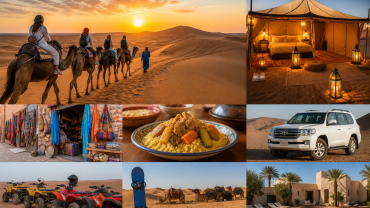
This is the activity most people come to Merzouga for. A camel trek typically runs about an hour each way from town to a desert camp inside the dunes, with Erg Chebbi’s tallest dunes reaching roughly 150 m. It’s a slow, quiet way to arrive somewhere, and it’s usually timed for sunset or sunrise when temperatures are manageable. For the full rundown on what to expect and how to pick an operator that treats its animals well, see our complete Merzouga activity guide.

2. Sleep Overnight in a Desert Camp
An overnight stay inside Erg Chebbi is what turns a day trip into a real Sahara experience. Camps range from simple Berber tents to glamping-style setups with private bathrooms, typically including dinner, a campfire, and a sunrise trek back the next morning. See where to stay in Merzouga for a full breakdown of camp and hotel options.
3. Watch Sunrise or Sunset From the Dunes
Climbing a nearby dune for sunrise or sunset costs nothing extra and is worth the short, steep walk. The light shifts fast at both ends of the day, turning the sand from pale gold to deep orange to almost red within twenty minutes — bring a camera, and give yourself at least 30 minutes before the main event to find a spot away from other groups.
4. Try Sandboarding on the Dunes
Sandboarding — essentially snowboarding technique applied to sand — has become a popular add-on activity at Erg Chebbi. It’s easiest on the steeper dune faces closer to camp, and most desert-camp operators can arrange a board on request. No prior boarding experience is required, though expect a few falls before you get the hang of the looser surface.
5. Take a 4×4 or Quad-Bike Desert Excursion
For a faster, more adrenaline-driven way to cover ground, 4×4 and quad-bike excursions run out from Merzouga across the hamada and dune edges. These work well as an alternative or addition to camel trekking — some travelers do the trek in one direction and a 4×4 transfer in the other, getting both experiences without doubling the time commitment.

6. Visit Khamlia for Gnawa Music
Khamlia, a village of around 390 people roughly 7 km south of Merzouga, is home to a Gnawa community descended from sub-Saharan Africans brought across the Sahara between the 8th and 19th centuries. Gnawa music — performed on the three-stringed guembri and metal krakebs — carries genuine spiritual significance beyond entertainment, historically used in healing rituals. A half-day visit typically includes a live performance and a chance to see the instruments up close. We cover this in full detail in our guide to the music and traditions of Khamlia.
7. Go Birdwatching at Dayet Srij
Dayet Srij is a seasonal saltwater lake about 4 km west of Merzouga — dry and cracked in some years, a genuine inland lake in others, depending on autumn and winter rainfall. When there’s enough water, typically November through April, it attracts flamingos, herons, egrets, and migratory species crossing between Europe and Africa. It’s a striking, easy-to-miss contrast to the dunes, and worth checking with your camp or operator on current water levels before planning a special trip around it.
8. Stargaze Under Some of Morocco’s Darkest Skies
Merzouga’s distance from major towns means minimal light pollution, and the dry desert air keeps the sky remarkably clear most nights. Most desert camps build stargazing into the evening naturally — no special equipment required, though a basic star-chart app helps you pick out constellations you won’t see clearly from a city.

9. Share Tea With a Nomadic Family
Some desert-camp itineraries include a stop at a nomadic or semi-nomadic family’s tent for traditional Moroccan mint tea — a small but genuine window into a way of life that’s increasingly rare in the region. It’s usually arranged through your guide rather than something you can drop in on independently, so ask when booking if this is something you’d like included.
How Many Days Do You Need?
Two full days (one night in the desert) covers the essentials: camel trek, overnight camp, sunrise or sunset viewing, and stargazing. Three days gives room to add Khamlia, sandboarding, or a 4×4 excursion without rushing. Beyond that, most travelers are better served by combining Merzouga with other parts of southern Morocco rather than staying longer in one place. For a fuller seasonal breakdown of when to visit, see our Merzouga packing list and trip-prep guide.
Frequently Asked Questions
What is the number one thing to do in Merzouga?
A camel trek into Erg Chebbi combined with an overnight desert camp is the activity almost every Merzouga trip is built around — it’s the experience most travelers specifically come for.
How many days should I spend in Merzouga?
Two days (one night in the desert) covers the core experience. Three days allows time to add extras like Khamlia village, sandboarding, or a 4×4 excursion without rushing.
Can you really see flamingos near Merzouga?
Yes, seasonally. Dayet Srij, a seasonal lake about 4 km from Merzouga, attracts flamingos and migratory birds roughly November through April in years with sufficient rainfall. It’s dependent on water levels, so check current conditions with your camp or operator.
Are there free things to do in Merzouga?
Yes — watching sunrise or sunset from a nearby dune costs nothing beyond the short walk up, and stargazing requires no special equipment. Most other activities (camel trekking, camps, sandboarding, 4×4 excursions) involve a guide or operator fee.
Is Khamlia village worth visiting?
Yes, if you’re interested in genuine cultural experiences beyond the dunes. Khamlia’s Gnawa music tradition has real historical and spiritual depth, and a visit typically takes a half day round trip from Merzouga.
Conclusion
Merzouga rewards travelers who build a little variety into their itinerary rather than doing only the camel trek and heading home. Two or three days is enough to combine the essentials — dunes, camp, sunrise or sunset — with at least one extra, whether that’s Khamlia’s music, a sandboard run, or a lucky sighting of flamingos at Dayet Srij.
Ready to plan your trip? Browse our guided Merzouga desert tours, compare all the options in our best Merzouga desert tours guide, or check our full packing list and trip-prep guide before you go.