English


Is Merzouga worth visiting? For most travelers building a Morocco itinerary, yes — but with real trade-offs worth knowing before you commit two or three days to reaching it. Merzouga sits at the edge of Erg Chebbi, one of Morocco’s largest and most accessible dune fields, and it’s the place most travelers picture when they imagine “the Sahara” in Morocco. The dunes, the desert camps, sunrise and sunset over the sand, and the journey through the High Atlas or Middle Atlas to get there are genuinely worthwhile for many people. The honest caveat: Merzouga is far from Marrakech and Fes, the trip eats several days of a shorter itinerary, and summer heat is intense. Whether it’s worth it for you depends on your time, priorities and tolerance for a long overland journey — this guide walks through exactly who it suits and who might want to reconsider.
Is Merzouga Worth Visiting?
Short answer: Yes, for travelers who want genuine Sahara dune scenery, a desert camp night, and don’t mind a long (often multi-day) overland journey to get there. It’s a weaker fit for travelers with under five days total in Morocco, those touring only Marrakech and the coast, or anyone who dislikes long car journeys and extreme heat.
What Makes Merzouga Special?
Merzouga itself is a small village; what draws travelers is Erg Chebbi, the sea of dunes immediately beside it — commonly cited as reaching around 150 metres in height in places, among the tallest and most accessible dune systems in Morocco. It’s worth being precise here: Merzouga is not “the Sahara” in the sense of the vast desert that stretches across North Africa — it’s a specific access point to one dune field at the Sahara’s northwestern edge, in southeastern Morocco’s Tafilalt region, close to the Algerian border. That distinction matters, because it’s exactly why Merzouga works so well for visitors: real dune scenery reachable by paved road, rather than a multi-day expedition into the deep desert.
What makes it more than “big sand dunes,” though, is the combination: the dunes themselves, a genuinely dark night sky for stargazing, desert camps built specifically around the sunrise/sunset experience, and the nearby village of Khamlia with its Gnawa musical heritage — plus the fact that reaching Merzouga usually means driving through some of Morocco’s best mountain and gorge scenery first. For general orientation before diving into whether it’s worth the trip, see our complete Merzouga travel guide.
8 Reasons Merzouga Is Worth Visiting
1. Erg Chebbi’s Dunes
This is the actual draw. Erg Chebbi’s dunes are large, photogenic, and — unlike some of Morocco’s smaller dune patches near Zagora — genuinely feel like “real” Sahara dune scenery rather than a rockier, scrubbier approximation. Walking up a dune at golden hour, with the sand shifting underfoot and the ridgelines stretching out, is the experience most people are actually picturing when they decide to visit Merzouga.
2. Desert Sunrise and Sunset
The dunes change color dramatically at both ends of the day — deep oranges and pinks at sunset, softer gold at sunrise. Most camps and tours are built around one or both of these windows, since the flat light of midday is far less dramatic. Sunrise requires an early, often pre-dawn wake-up and a short walk or camel ride to a viewpoint dune; it’s genuinely worth the lost sleep for most travelers, but it’s fair to know in advance that it’s not a lie-in kind of morning.
3. Stargazing
With minimal light pollution and clear desert air, Merzouga’s night sky is a legitimate highlight, particularly on a clear, moonless night. Many camps have no electric lighting beyond the camp itself, which helps considerably. If astrophotography or stargazing is a priority, ask your camp about their distance from other lit camps and whether they can point out a good viewing spot away from campfires.
4. Camel Trekking
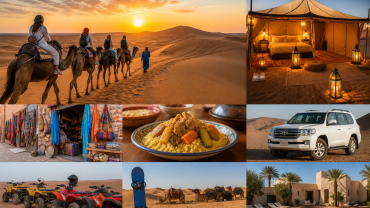
A camel trek into the dunes — usually timed for sunset arrival at a camp, or sunrise departure — is the classic way to approach Erg Chebbi’s interior. It’s slower and more atmospheric than a 4×4 transfer, if less immediately comfortable for anyone unused to riding. See the dedicated section further down for a balanced look at whether it’s worth it for you specifically.
5. Desert Camps
An overnight stay in a camp set among the dunes is what turns a day trip into an actual Sahara experience — sitting around a fire, eating a meal under open sky, then waking up to the dunes at sunrise. Quality varies significantly between camps, covered in detail below.
6. 4×4 and Off-Road Experiences
For travelers who want to cover more ground than a camel trek allows — reaching more remote dune areas, fossil sites, or nomadic families further from the main camp routes — a 4×4 excursion with a local driver opens up parts of the desert most visitors don’t see. This is different from needing a 4×4 simply to reach Merzouga itself, which you don’t; see our guide to whether you need a 4×4 in Merzouga for that distinction.
7. Khamlia and Local Cultural Experiences
A short drive from Merzouga, Khamlia is home to a community with Gnawa musical heritage — a tradition rooted in West and sub-Saharan African history, distinct from Amazigh (Berber) culture, built around the guembri lute and qraqeb metal castanets. An evening performance, arranged respectfully through a local guide, is a genuine cultural experience rather than a staged add-on, provided you treat the musicians as professionals rather than a photo opportunity. Our guide to Khamlia’s music and traditions covers this in more depth, and our Merzouga traditions and food guide covers the wider cultural and culinary picture.
8. The Journey Through Southeastern Morocco
This is easy to overlook when weighing “is it worth it,” but the road to Merzouga is genuinely part of the appeal, not just a cost to endure. From Marrakech, that means the Tizi n’Tichka pass through the High Atlas, the kasbah of Aït Ben Haddou (a UNESCO World Heritage site), Ouarzazate, and the Dades or Todra Gorges. From Fes, it means the Middle Atlas’s cedar forests and the Ziz Valley’s palm groves. Treated as a multi-day route rather than a transfer, the journey itself is often as memorable as the dunes at the end of it.
Reasons Merzouga Might Not Be for Everyone
A trustworthy answer to “is it worth visiting” has to include the honest downsides. Here’s what can make Merzouga a poor fit for some travelers:
- Distance from major cities. Merzouga is roughly 560 km / 9–11 hours’ driving from Marrakech and roughly 470 km / 7–9 hours from Fes. This is a genuine multi-day commitment, not a day trip.
- Long driving times either way. Even split across two days each direction, you’re spending a meaningful chunk of a Morocco trip in transit.
- Summer heat. Daytime temperatures in Merzouga commonly reach the high 30s and low-to-mid 40s°C (around 100–110°F) in June through August, which can be genuinely uncomfortable for activity during the day, even though camps and evenings are more manageable.
- Tourism concentration. Merzouga is one of Morocco’s most-visited desert destinations, so the most accessible dune areas and standard camp circuits see real tourist traffic, especially around sunset and sunrise.
- Variable camp and tour quality. Not every camp or tour operator delivers the same experience — location inside or at the edge of the dunes, facilities, and guide quality vary widely, and cheap options can disappoint.
- Crowded pinch points during peak periods. Popular viewpoint dunes near the main camp clusters can feel busy at sunset in high season, even if the wider dune field is enormous.
- Early starts. Sunrise viewing means a genuinely early wake-up, which not every traveler wants on a trip meant to include rest.
- Expectations vs. reality. Travelers picturing total, silent isolation in an empty desert are sometimes surprised by how organized and camp-dense the main tourist areas are — genuine isolation exists, but usually requires seeking it out rather than assuming it by default.
Is Merzouga Too Touristy?
It depends heavily on when, where and how you visit. The most photographed viewpoint dunes near the main camp clusters do get busy at sunset in peak season (spring and autumn especially), with multiple camel trains and 4x4s converging at similar times. But Erg Chebbi is large, and a camp set further from the main access points, a sunrise instead of sunset excursion, or simply a guide willing to walk or drive a bit further, can produce a genuinely quiet experience even in high season.
Practical advice for a quieter visit: ask your camp specifically how far it sits from the nearest neighboring camp and the main entry points; consider sunrise over sunset, since fewer visitors make the effort; travel in shoulder season (late autumn or winter) when volumes are lower; and be willing to walk or ride a little further into the dunes rather than stopping at the first photogenic ridge.
How Many Days in Merzouga?
A crucial distinction: time spent traveling to Merzouga and time actually spent in Merzouga are not the same thing, and it’s easy to underestimate how much of a Marrakech or Fes-based trip disappears into the drive. A “3-day Marrakech to Merzouga tour,” for instance, typically means one full night in the desert and two days largely spent on the road each way.
| Time Available | What You Can Realistically Do | Recommendation |
|---|---|---|
| 1 night | Arrive, one camp night with sunset and/or sunrise, camel trek, depart | Workable but tight — expect most of your “trip” to actually be travel time to and from Merzouga |
| 2 nights | One night in a desert camp plus one night in Merzouga village or a nearby guesthouse; time for camel trek, a 4×4 excursion or Khamlia visit | A reasonable minimum for feeling like you actually experienced Merzouga, not just passed through |
| 3 days | Comfortable pacing with stops en route (Aït Ben Haddou, Dades/Todra, or the Ziz Valley), one or two desert nights, and time for more than one activity | A solid, well-rounded option for most travelers coming from Marrakech or Fes |
| 4+ days | Unhurried multi-stop route with real time at Ouarzazate, the gorges, Khamlia, and multiple desert activities without rushing | Ideal if you want the journey itself to be a highlight, not just a means to reach the dunes |
Is the Journey to Merzouga Worth It?
Is Merzouga Worth Visiting From Marrakech?
Realistically, yes — but treat the ~560 km / 9–11 hour route as a multi-day journey, not a transfer. The standard path runs Marrakech → the High Atlas via the Tizi n’Tichka pass → Aït Ben Haddou and Ouarzazate → the Dades or Todra Gorge region → Merzouga. Splitting it across two days each way, with an overnight around Ouarzazate or the gorges, means you actually experience the pass and the kasbahs in daylight instead of racing through mountain roads. For the full route comparison and transport options, see our guide to the best way to travel to Merzouga.
Is Merzouga Worth Visiting From Fes?
Yes, and it’s a somewhat shorter, less mountainous alternative to the Marrakech route: roughly 470 km / 7–9 hours via the Middle Atlas (Ifrane, Azrou), Midelt, the Ziz Valley and Erfoud. It’s still a long single-day drive if attempted in one push, so most travelers break it up with a stop around Midelt or the Ziz Valley.
Is Merzouga Worth Visiting From Errachidia?
If you’re flying into Errachidia — the closest regional airport to Merzouga, roughly 120–130 km / 1.5–2 hours away — it’s a genuinely convenient gateway, especially for travelers short on time, since it skips the long overland drive from Marrakech, Fes or Casablanca entirely. The trade-off is that Errachidia has limited flight frequency (mainly domestic connections via Casablanca), so check current flight availability before planning around it. See our Errachidia Airport to Merzouga guide for the full breakdown.
What to Do in Merzouga
- Camel trekking: The classic approach into the dunes, usually timed around sunset or sunrise.
- Sunrise and sunset viewing: The two windows when the dunes are at their most dramatic, and when most organized activities are scheduled.
- Stargazing: Best on clear, moonless nights, away from camp lighting.
- Sandboarding: A more active option on the steeper dune faces, popular with younger and adventure-focused travelers.
- 4×4 excursions: Cover more ground than walking or camel trekking allows, useful for reaching quieter areas or fossil sites.
- Khamlia: An evening of Gnawa music, arranged respectfully — see the cultural section above.
- Desert camp evenings: Communal meals, music around the fire, and the overnight experience itself.
- Photography: Golden-hour dune light, star trails, and the approach roads through the Atlas or Ziz Valley all offer strong material.
- Local food: Tagines, madfouna and mint tea are part of the experience wherever you eat — our Merzouga food and traditions guide covers what to expect at meals.
- Surrounding landscapes: Beyond the main dune field, the wider Tafilalt region includes oases, palm groves and small communities worth a look if you have extra time.
For a fuller rundown of activities and how to combine them, see our best things to do in Merzouga guide.
Is a Merzouga Desert Camp Worth It?
For most travelers, yes — an overnight camp is what turns Merzouga from “saw some dunes” into an actual desert experience. But camps vary considerably, and it’s worth knowing what you’re choosing between:
- Standard camps typically offer shared or simpler facilities, a communal dinner, and a straightforward camel or 4×4 transfer — a solid, budget-friendlier option for travelers who mainly want the core experience.
- Luxury camps add private bathrooms, more elaborate furnishings, sometimes electricity or heating, and a more polished dining experience — at a higher price point.
- Location matters more than most travelers expect: a camp set deep in the dunes offers more privacy and a quieter night sky than one near the main road or camp cluster.
- Meals and entertainment vary — some camps include a simple set dinner and informal music, others build a fuller evening program.
- Transfers (camel or 4×4 into the camp) should be confirmed in advance, along with what happens to any luggage or vehicle left behind.
Before booking, check: exact camp location (ask for it relative to known landmarks, not just “in Erg Chebbi”), what’s included in the price (meals, drinks, transfers, activities), bathroom arrangements (private vs. shared, and whether it’s an actual toilet or a more basic setup), and cancellation or weather-contingency policies. We won’t quote universal prices here since they vary by camp category, season and operator — see where to stay in Merzouga for a fuller comparison of accommodation styles.
Is Camel Trekking in Merzouga Worth It?
For most first-time visitors, yes — it’s a distinctive, slower way to approach the dunes that a 4×4 transfer doesn’t replicate. A typical trek runs somewhere around 45 minutes to an hour or so each way, timed for sunset arrival or sunrise departure at a camp. It’s genuinely atmospheric, but worth setting expectations: camel saddles aren’t especially comfortable for long periods, the pace is slow, and the novelty matters more than the comfort.
A few honest considerations: riders with back or hip issues, young children, or limited mobility may find an extended ride uncomfortable, and a 4×4 transfer is a perfectly reasonable alternative that reaches the same camp with far less physical demand. On the ethical side, look for operators whose animals are visibly well cared for (reasonable loads, rest breaks, no obvious signs of mistreatment) — ask your guide or accommodation directly if you have concerns, and it’s fair to choose a walking approach or 4×4 transfer instead if you’d rather not ride at all. See our guide to the best season for camel trekking for timing-specific advice.
When Is Merzouga Most Worth Visiting?
Climate data checked August 2026: expect daytime highs in the high 30s to low-to-mid 40s°C (roughly 100–110°F) through June, July and August, making midday activity genuinely uncomfortable, though early mornings, evenings and camp nights remain manageable. Winter (December–February) brings much milder, pleasant daytime temperatures around 19–21°C (66–70°F), but desert nights can drop close to or below freezing — pack warm layers even though the days feel mild. Spring (March–May) and autumn (September–November) are generally considered the most comfortable stretches, with warm but not extreme days and cooler, manageable nights — which is also when the most visitors travel, so expect somewhat busier camps and viewpoints in return for the best weather.
If avoiding crowds matters more than having ideal weather, winter offers a genuine trade-off: fewer visitors, mild days, cold nights (well worth packing for). If comfort matters most, spring and autumn are the safer bet. Summer is workable if you specifically want fewer crowds and can manage the heat, but it’s not the easiest season for most travelers. For a deeper month-by-month breakdown, see our best time to visit Merzouga guide.
Merzouga vs. Zagora
This is a genuine fork in the road for many Morocco itineraries, and the honest answer is that they offer different experiences rather than one being universally “better.”
| Factor | Merzouga | Zagora |
|---|---|---|
| Dune experience | Large, genuine Erg Chebbi dunes (commonly cited up to ~150m) | Smaller, patchier dune areas; much of the surrounding landscape is rockier, flatter desert |
| Travel from Marrakech | Longer — roughly 9–11 hours’ driving | Shorter — roughly 6 hours’ driving |
| Best for | Travelers who specifically want authentic large-dune scenery and can allow more travel time | Travelers with a shorter Marrakech-based itinerary who still want a desert taste |
| Time required | Typically 2–3+ days round trip from Marrakech | Can be done as a shorter 1–2 day round trip |
| Desert landscape | Closer to the classic “sea of dunes” Sahara image | More varied — rocky terrain, oases, smaller dune patches |
In short: choose Zagora if your itinerary genuinely can’t spare the extra days and you mainly want a taste of the desert alongside other Morocco highlights. Choose Merzouga if authentic large-dune scenery is a priority worth the extra travel time, or if your route naturally continues on toward Fes rather than looping back to Marrakech.
Who Should Visit Merzouga?
Merzouga is especially suitable for:
- Couples looking for a memorable, slightly indulgent overnight experience
- Families with older children who can handle the travel time and enjoy an adventurous overnight (see our Merzouga with kids guide for specifics)
- Photographers drawn to dune light, night skies and the route’s landscapes
- Adventure travelers interested in camel trekking, sandboarding or 4×4 excursions
- First-time Morocco visitors who want one genuine desert experience as part of a wider trip
- Travelers interested in landscapes and culture, given the combination of dunes, mountain/gorge scenery en route, and Khamlia’s musical heritage
Think twice if:
- You have five days or fewer in Morocco and are also trying to cover Marrakech, Fes, Chefchaouen and the coast
- You strongly dislike long car journeys or get travel-sick on winding mountain roads
- You’re visiting in peak summer and heat genuinely affects your health or comfort
- You want guaranteed total isolation with zero other visitors nearby — that’s achievable but requires deliberate planning, not the default experience
- Your main interest is coastal cities, medinas or the Atlantic coast, and the desert is a low-priority “extra” rather than something you actively want
How Much Should You Budget for Merzouga?
Rather than quoting universal prices that go stale quickly, here’s what actually drives the cost of a Merzouga trip:
- Transportation: A rental car, private transfer, bus, or organized tour each sit at different price points — see our best way to travel to Merzouga guide for a full comparison.
- Accommodation: Guesthouses in the village and standard desert camps sit at one end; luxury camps and boutique riads at the other.
- Desert camps: Price generally scales with privacy, facilities (private bathroom, electricity) and how far into the dunes the camp sits.
- Food: Meals included in camp/tour packages versus paying separately at restaurants changes the total meaningfully.
- Camel activities: Usually bundled into a camp package rather than priced separately, but confirm this when booking.
- 4×4 excursions: Priced by duration and group size (private vs. shared vehicle).
- Guides: A knowledgeable local guide costs more than a generic driver but usually adds real value, especially for cultural stops like Khamlia.
- Additional activities: Sandboarding, extended photography excursions or fossil-site visits typically cost extra on top of a standard package.
In general, cost scales with comfort level, privacy, and how much is bundled into one package versus arranged piecemeal. Booking through a reputable local operator and asking exactly what’s included (transfers, meals, drinks, activities) avoids the most common budget surprises.
Mistakes That Can Make Merzouga Feel “Not Worth It”
- Trying to do Marrakech → Merzouga → Marrakech too quickly. Compressing a 9–11 hour route each way into a rushed round trip leaves little energy or time to actually enjoy the desert.
- Choosing solely based on the cheapest camp. The lowest price often means a less desirable location, thinner facilities, or a bigger group than you expected.
- Not checking the camp’s actual location. “In Erg Chebbi” can mean anywhere from right at the edge to deep in the dunes — ask for specifics.
- Expecting complete desert isolation by default. The busiest viewpoints and camp clusters see real traffic; genuine solitude usually requires asking for it specifically.
- Visiting in extreme heat without preparation. Summer visits are workable with the right precautions (hydration, timing activities around the heat, appropriate clothing) but miserable without them.
- Overpacking activities into one day. Trying to fit a camel trek, 4×4 excursion, Khamlia visit and sandboarding into a single overnight stay usually means rushing all of them.
- Assuming every desert camp is directly accessible by normal car. Many camps require a final 4×4 or camel transfer from a fixed meeting point — confirm this before you arrive.
- Booking without understanding what’s included. Meals, drinks, transfers and activities vary by package — clarify before paying, not after arriving.
- Spending more time driving than experiencing Merzouga. If your schedule only allows one rushed night, it’s worth honestly asking whether the dunes justify that ratio for your particular trip, or whether Zagora or another region fits better.
Final Verdict: Is Merzouga Worth Visiting?
Worth it for: Travelers who want genuine large-dune Sahara scenery, a desert camp night, stargazing, and don’t mind a long overland journey as part of the experience.
Think twice if: You have a very short Morocco itinerary, dislike long drives, or are traveling in peak summer heat without preparation.
Ideal stay: At least 2 nights around the trip (one full desert camp night plus a night in Merzouga village or a stop en route), 3+ days if arriving from Marrakech or Fes by road.
Best experience for: Couples, photographers, adventure travelers, and first-time Morocco visitors wanting one genuine desert experience.
Biggest drawback: The distance and driving time from Morocco’s main cities, which is unavoidable regardless of transport method.
Our verdict: Merzouga is worth visiting for most travelers who can allow at least 3 days total for the round trip and overnight, especially if they treat the journey itself as part of the experience rather than an obstacle. It’s a weaker fit for very short, city-focused itineraries — in that case, Zagora or simply skipping the desert leg are reasonable alternatives, not failures of planning.
Frequently Asked Questions
Is Merzouga worth visiting?
Yes, for travelers who want genuine Sahara dune scenery, a desert camp night and stargazing, and who can allow enough time for the long journey there. It’s a weaker fit for very short Morocco itineraries.
How many days do you need in Merzouga?
At least one full night in a desert camp, ideally two nights total, and 3+ days including travel if coming from Marrakech or Fes by road.
Is Merzouga too touristy?
The main viewpoint dunes and camp clusters get busy at sunset in peak season, but Erg Chebbi is large enough that a camp set further out, or a sunrise visit, can feel genuinely quiet.
Is Merzouga safe for tourists?
Merzouga is a well-established tourist destination with an active local tourism industry; ordinary travel precautions (booking through reputable operators, confirming arrangements in advance) apply as they would anywhere.
Is Merzouga worth the drive from Marrakech?
Yes for most travelers, provided the ~9–11 hour route is split across two days each way so the High Atlas, Aït Ben Haddou and the gorges become part of the trip rather than a rushed transfer.
Is Merzouga worth visiting from Fes?
Yes — it’s a somewhat shorter (~470 km/7–9 hour) and less mountainous route than from Marrakech, via the Middle Atlas, Midelt and the Ziz Valley.
Is a Merzouga desert camp worth it?
Yes for most travelers — it’s what turns a day visit into an actual desert experience. Camp quality and location vary significantly, so confirm details before booking.
Is camel trekking in Merzouga worth it?
For most first-time visitors, yes — it’s a distinctive, atmospheric way to approach the dunes, though a 4×4 transfer is a comfortable alternative for anyone with mobility concerns or limited interest in riding.
What is special about Merzouga?
Its direct, paved-road access to Erg Chebbi’s large Sahara dunes, combined with dark-sky stargazing, desert camp culture, and nearby Khamlia’s Gnawa musical heritage.
What is the best month to visit Merzouga?
Spring (March–May) and autumn (September–November) generally offer the most comfortable balance of daytime warmth and manageable nights, though they’re also the busiest months.
Is Merzouga better than Zagora?
Not universally “better” — Merzouga has larger, more authentic dune scenery but requires more travel time; Zagora is faster to reach from Marrakech but has smaller, rockier desert terrain.
Can you visit Merzouga without a tour?
Yes — self-driving or arranging independent transport and accommodation is entirely possible; a tour simply bundles logistics and sightseeing together for travelers who’d rather not plan it themselves.
Can you reach Merzouga with a normal car?
Yes — every main route from Marrakech, Fes, Ouarzazate or Errachidia is fully paved; a 4×4 only becomes relevant once you’re driving off-road around the dunes themselves.
Is one night in Merzouga enough?
It’s workable if that’s all your schedule allows, but it means most of your actual trip time is spent traveling rather than experiencing the desert — two nights is a more comfortable minimum.