English


This Complete Merzouga Travel Guide 2026: Best Time, Costs, Tours and 3–4 Day Itineraries is designed for travelers who want to experience the Erg Chebbi dunes without spending their whole trip guessing how to organize it. You will find practical advice on when to go, how to get to Merzouga, what a desert tour usually includes, how to think about costs, and how to build a realistic three- or four-day plan.
Before you go, it is worth reading our honest guide to how safe Merzouga actually is, covering real risks like heat, road travel and activity safety.
If you are still weighing whether the trip makes sense for your itinerary, our honest look at whether Merzouga is worth visiting breaks down the real trade-offs before you commit.
Still deciding how to get there? Our best way to travel to Merzouga guide compares flights, private transfers, rental cars, buses and tours by route and traveler type.
Merzouga is a small desert destination in southeastern Morocco, close to the Algerian border and best known as the gateway to the golden dunes of Erg Chebbi. A visit can be simple—a night in a camp and a sunrise over the dunes—or it can become part of a longer route linking Marrakech, Ouarzazate, the Dades Valley, Todra Gorge, the Ziz Valley, Errachidia or Fes.
The key to a good trip is allowing enough time for the long distances. Merzouga is not a quick side trip from Morocco’s major cities. The scenery between destinations is part of the experience, and a rushed schedule can leave you spending more time in a vehicle than in the desert.
Merzouga at a glance
- Destination: Merzouga, in Morocco’s Drâa-Tafilalet region.
- Main attraction: Erg Chebbi, a large dune field reached from the village and surrounding desert settlements.
- Typical stay: One night in a desert camp plus one or more nights in a guesthouse or hotel near the dunes.
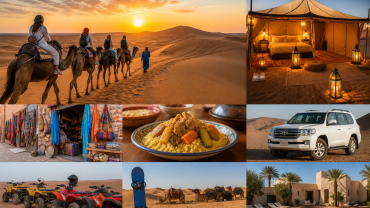
- Signature experiences: Sunset and sunrise, a camel trek, a 4×4 desert circuit, stargazing, Gnawa music in Khamlia and visits to seasonal or cultural sites.
- Best trip style: A private or small-group route with time for scenic stops and a flexible desert day.
What to expect from a trip to Merzouga
Merzouga is quieter and more spread out than a city destination. Accommodation is located around the village, along the road toward the dunes, or in nearby settlements. Your tour may begin with a pickup from a city or transport hub and finish at a different place, so confirm the route before booking.
The desert experience usually starts in the afternoon. Travelers meet a camel team or transfer by vehicle toward camp, watch the light change across the dunes, eat dinner and spend the night under a dark sky. The next morning often begins early for sunrise, followed by breakfast and a return to the village or a 4×4 excursion.
Conditions are comfortable only if you plan for contrast. Summer afternoons can be extremely hot, while winter mornings and nights can feel cold. Sand is part of the environment: it gets into shoes, bags, cameras and vehicle floors. A relaxed attitude and a small, practical day bag make a noticeable difference.
Complete Merzouga Travel Guide 2026: choosing the best time
The most comfortable periods are generally spring and autumn, when daytime sightseeing is easier and evenings are more manageable. Winter can provide crisp air, clear views and excellent opportunities for photography, but you should bring warm layers for the night. Summer is possible, especially if your itinerary is built around early mornings and late afternoons, but heat may limit daytime activities.
For a detailed month-by-month comparison, see the existing Best Time to Visit Merzouga by Month and Activity. That article is useful when your priorities are photography, camel trekking, family travel or avoiding the most intense heat.
Spring
Spring is a strong all-round choice. The dunes are usually the focus, but the road from Ouarzazate or the Dades Valley can also be rewarding at this time of year. Pack light clothing for the afternoon and a fleece or jacket for the evening.
Summer
Summer requires a heat-aware plan. Schedule walks and excursions around sunrise and sunset, drink water regularly, and choose accommodation with a shaded common area and practical cooling arrangements. A private itinerary can be easier to adapt than a fixed group departure.
Autumn
Autumn is popular because the desert becomes more comfortable after the hottest part of the year. Book transport and camp accommodation in advance if your dates overlap with busy holiday periods.
Winter
Winter days can be pleasant, but nights in the dunes may be genuinely cold. Take thermal layers, a warm outer layer and socks that can be removed before entering your tent. If winter photography is your main reason for visiting, the site’s guide to visiting Merzouga in winter for sunrise, stars and photography offers more focused planning ideas.
How to get to Merzouga
How to get to Merzouga depends on your starting point, travel style and tolerance for long road journeys. The destination is commonly reached by road from Marrakech, Ouarzazate, Fes or Errachidia. There is no single best route for every traveler.
From Errachidia
Errachidia is one of the most practical arrival points for a shorter desert trip. Travelers may continue by private transfer, rental car or organized tour. This option works well when you want to spend more time around Erg Chebbi rather than using several days to cross southern Morocco.
For a structured route, compare the Three-day Errachidia to Merzouga Tour or the 3 Day Merzouga Tour from Errachidia. Check the pickup point and final drop-off carefully because transport arrangements vary.
From Fes
A Fes route can include the Middle Atlas, cedar forests, high plateaus and the Ziz Valley before reaching the desert. It is a good choice for travelers who want a gradual change from historic city to mountain and pre-Saharan landscapes. The road journey is long, so a multi-day tour is usually more comfortable than trying to connect everything in one rushed transfer.
The Four-day Fes to Merzouga Tour is one existing itinerary to review when comparing route structure and included stops.
From Marrakech
The Marrakech route generally crosses the High Atlas and passes through the Ouarzazate area, Aït Ben Haddou, the Dades Valley or other southern landscapes depending on the itinerary. This is a popular way to combine famous cultural and geological sites with the dunes, but it requires several travel days.
For a route that combines these regions, consult the 3 Day Marrakech to Merzouga Desert Tour. Ask whether the schedule is private or shared, how much driving is expected each day and whether camp transfers are included.
From Ouarzazate or the Dades Valley
Starting in Ouarzazate or nearby valleys puts you closer to the desert than starting in Marrakech, although the route can still involve long stretches of road. This option suits travelers already exploring southern Morocco. A four-day route with off-road sections may appeal to people who want to see less-visited desert landscapes as well as Erg Chebbi; the 4 Day Ouarzazate to Merzouga Off Road Tour provides a useful comparison.
How many days do you need in Merzouga?
At least one night in the dunes is worthwhile, but two nights in the Merzouga area create a much calmer experience. The extra day can be used for a 4×4 circuit, Khamlia, local landscapes, a slower morning or simply time to rest after a long transfer.
A three-day itinerary can work when you begin close to Merzouga or accept substantial driving. A four-day itinerary is better if you are coming from Fes, Marrakech or Ouarzazate and want several sightseeing stops on the way.
A practical 3-day Merzouga itinerary
Day 1: Arrive and enter the dunes
Arrive in the Merzouga area in the afternoon if possible. Leave your main luggage at your hotel or arrange for the camp operator to transfer it. Carry a small bag with warm clothing, water, toiletries, medication, a camera and a headlamp.
Travel toward camp by camel or 4×4, depending on your booking and personal preference. A camel trek is a traditional way to approach the dunes, while a 4×4 transfer is often more comfortable for travelers with mobility concerns, young children or limited time. Watch sunset from a suitable dune, then have dinner and enjoy the evening program if one is offered.
Day 2: Sunrise, camp and a desert circuit
Wake early for sunrise. After breakfast, return to the village or keep your luggage at camp according to the operator’s arrangements. Use the rest of the day for a 4×4 excursion around the Erg Chebbi area.
Possible stops can include the village of Khamlia, known for Gnawa music; seasonal lake areas when conditions allow; viewpoints over the dunes; and nomadic or rural settlements where visits are arranged respectfully. Do not assume that every stop is available year-round. Weather, local conditions and private land access can affect the route.
Spend a second night near the dunes if your schedule allows. This avoids packing immediately after the camp night and gives you another chance to see the changing light.
Day 3: Slow morning and departure
Have breakfast, take a short walk near your accommodation and depart after confirming the driving plan. If you are continuing toward Errachidia, Fes or Ouarzazate, keep the day realistic. A long road transfer plus several major sightseeing stops may not be comfortable in practice.
A practical 4-day Merzouga itinerary
Day 1: Southern Morocco route and scenic stops
Begin from Ouarzazate, the Dades Valley, Errachidia or another agreed starting point. Use the day for landscapes rather than trying to reach the dunes as early as possible. Depending on your route, stops may include a kasbah area, a valley viewpoint, a gorge or the Ziz Valley.
Day 2: Reach Merzouga and stay in the desert
Continue toward Merzouga and arrive with enough daylight for your camp transfer. Keep the afternoon free for the dunes, sunset and settling into camp. This is also the day to confirm the next morning’s departure time and luggage arrangements.
Day 3: Erg Chebbi activities and local culture
Start with sunrise and breakfast, then choose a desert activity that matches your interests. A 4×4 circuit gives you a wider view of the area; a quiet dune walk gives you more time for photography; a visit to Khamlia adds cultural context. If you visit a music group or local family, ask before photographing people and follow your guide’s advice about respectful interaction.
Day 4: Depart without overloading the schedule
Leave after breakfast for your next destination. If you need to reach Fes or Marrakech on the same day, confirm the estimated arrival time before booking onward transport. When possible, add a separate overnight stop between Merzouga and a major city.
Merzouga desert tour options
A Merzouga desert tour can be private, shared, self-arranged or built around a transfer. The right option depends on whether you value flexibility, a lower per-person cost, privacy, off-road access or a simple booking process.
- Private tour: Usually offers more control over stops, departure times and route pace. Confirm vehicle type, guide arrangements and what happens if you want to change the schedule.
- Small-group tour: Can be a practical way to share transport and meet other travelers. Ask about group size, pickup windows and whether activities are optional or fixed.
- Desert-only package: Focuses on the camp, camel or 4×4 transfer and local activities. It suits travelers who have arranged their own transport to Merzouga.
- Long-distance route: Connects Merzouga with Fes, Marrakech, Ouarzazate, Agadir or Errachidia. Compare the number of nights and driving hours, not only the headline itinerary.
Understanding Merzouga costs
There is no single standard cost for travel to Merzouga. The total depends on your starting city, season, accommodation, group size, vehicle, guide, camp style, number of nights and included meals. Treat any online price as a starting point and request a written breakdown before paying.
Main cost categories
- Transport: Private vehicle, shared minibus, transfer, fuel and sometimes tolls or driver accommodation.
- Accommodation: Guesthouse or hotel nights near the dunes, plus the desert camp night.
- Activities: Camel trek, 4×4 circuit, quad or buggy experience where available, and cultural visits.
- Meals: Some packages include dinner and breakfast, while lunch, drinks and restaurant stops may be separate.
- Guiding: A route guide and a local desert guide may be different services. Confirm who accompanies you.
- Optional extras: Transfers, private tents, upgraded bedding, additional nights and special activities.
How to compare quotes
Ask whether the quote includes pickup, drop-off, accommodation, meals, camp transfer, luggage handling and activities. Also ask about the payment schedule, cancellation terms, vehicle capacity and what happens if weather or road conditions change the route.
A low initial quote may exclude items that you would otherwise pay for locally. A higher quote may include a private vehicle or additional accommodation. Compare like with like rather than choosing by price alone.
Things to do in Merzouga beyond a camel trek
- Watch sunrise and sunset: Light changes quickly across the dunes, so arrive early and allow time to walk to a viewpoint.
- Take a 4×4 circuit: This is useful for seeing more of the area without walking long distances in the heat.
- Visit Khamlia: Learn about local musical traditions through a pre-arranged visit. The site’s guide to planning a Khamlia village visit explains how to approach the experience thoughtfully.
- Try sandboarding: Ask whether boards are supplied and whether the activity is supervised. Walking back up a dune is more tiring than it looks.
- Stargaze: Put your phone away for a few minutes and let your eyes adjust. A headlamp with a red-light setting can be helpful around camp.
- Explore by bicycle or on foot: Do this only with local advice, enough water and a clear understanding of your route.
What to pack for Merzouga
- Light, breathable clothing that covers shoulders and knees when visiting villages or cultural sites.
- A warm layer for winter nights and cool seasons.
- Closed shoes that can handle sand.
- Sunglasses, sunscreen, lip balm and a hat or scarf.
- A refillable water bottle and any personal medication.
- A small overnight bag for camp, rather than taking a large suitcase into the dunes.
- Power bank, camera protection and a headlamp.
- Earplugs if you are sensitive to camp or shared-accommodation noise.
Practical advice for a smoother visit
Confirm your meeting point the day before departure. Merzouga-area accommodation names can be similar, and a hotel may be several kilometers from the village center. Share your accommodation name, phone number and arrival time with your driver or guide.
Keep valuables with you and use a day bag that closes securely. Sand can damage lenses and charging ports, so store electronics in a sealed pouch when you are not using them. Download essential maps and booking details before leaving larger towns, but do not rely on a phone alone for desert navigation.
Drink water even when you do not feel thirsty. Follow local advice about walking into the dunes, especially in high temperatures or strong wind. If you have a medical condition affected by heat, cold, dust or long vehicle journeys, plan accordingly and speak with a healthcare professional before traveling.
For more planning reminders, read Common Mistakes to Avoid in Merzouga. The advice is particularly useful if this is your first desert trip.
Is Merzouga suitable for families?
Merzouga can work well for families when the itinerary is not overloaded. Consider a 4×4 transfer instead of a long camel ride if younger travelers may become uncomfortable. Choose a camp with clear information about bathrooms, sleeping arrangements and meal times, and carry familiar snacks for children.
Build in rest after a long drive. A second night near the dunes is often more enjoyable than arriving late, riding immediately and leaving at dawn without recovery time.
Final planning checklist
- Choose a season that matches your heat and cold tolerance.
- Allow enough days for the route from your starting city.
- Decide whether you want a private tour, shared tour or desert-only stay.
- Request an itemized quote and confirm what is excluded.
- Reserve a camp and transport that match your comfort needs.
- Pack a small overnight bag, warm layers and sun protection.
- Confirm camel, 4×4, Khamlia and other activities in advance.
- Keep the schedule flexible enough for road, weather and local conditions.
Merzouga is most rewarding when you treat it as more than a photo stop. Give yourself time to notice the silence, changing light, village life and long landscapes between destinations. Use this Complete Merzouga Travel Guide 2026: Best Time, Costs, Tours and 3–4 Day Itineraries as a framework, then adjust the route to your starting point, budget and preferred pace.
Frequently asked questions
Frequently Asked Questions
How many days should I spend in Merzouga?
Plan at least one night in a desert camp. Two nights in the Merzouga area are more comfortable because they allow time for a 4×4 circuit, Khamlia or a slower desert day.
What is the best way to get to Merzouga?
The best option depends on your starting point. Errachidia is practical for a shorter trip, while Fes, Marrakech and Ouarzazate work well as part of a multi-day road tour.
What does a Merzouga desert tour usually include?
Many tours include road transport, accommodation, meals and a camp transfer by camel or 4×4. Confirm every inclusion, especially lunch, drinks, local activities, private transfers and upgraded camp features.
Is a camel trek necessary in Merzouga?
No. A camel trek is a popular way to reach camp, but a 4×4 transfer can be more comfortable for travelers with mobility concerns, young children or limited time.
Is Merzouga expensive?
Costs vary according to transport distance, group size, camp style, season and included activities. Compare itemized quotes rather than relying only on the advertised starting price.